
Time to say goodbye: Handling end-of-life consultations
End-of-life (EOL) consultations can help clients feel more confident in making the decision to euthanize by educating them on changes to look for and the importance of intervening before clear and visible suffering occurs

Euthanizing a beloved family pet is arguably the hardest decision a client can ever make. It is a decision involving a whole host of concerns and can benefit from the guidance of veterinary professionals.
One study found that, while the majority of clients making the decision to euthanize their pets felt the decision was the right one, nearly one quarter of the respondents were still left with feelings of guilt.1 Additionally, another report of clients who euthanized their pets for humane reasons found 16 per cent still felt “like a murderer.”2,3 End-of-life (EOL) consultations can help clients feel more confident in making the decision to euthanize by educating them on changes to look for and the importance of intervening before clear and visible suffering occurs.
A structured EOL consultation appointment, conducted either by a veterinarian or designated RVT, offers an opportunity to discuss the pet’s current quality of life and answer client questions about the entire euthanasia process.
Why offer an EOL consultation?
There are many reasons to offer an EOL consultation. Clients may not truly understand a disease pathway, pain presence, or the euthanasia process itself. Perhaps it is their first pet, they have never had to make the decision themselves, or they are still reeling from a prior traumatic euthanasia experience.4 They may not have considered all aspects of their pet’s quality of life and may not understand subtle behavioural changes that can occur during a pet’s decline. As such, clients may have difficult questions to ask you, but it is crucial they understand what happens at the appointment and what the available aftercare options are.
A structured, one-hour long, EOL consultation to address these questions and concerns is an opportunity to remove as much fear and uncertainty as possible—preparing the client for the inevitable euthanasia appointment.
A survey asking what factors were important to owners in determining a “good” euthanasia experience found those who had a pre-euthanasia appointment were more likely to report a good experience than those who did not. Further, when asked what was most important about the pre-euthanasia appointment, respondents highlighted the impact of having the euthanasia process explained in a way they could understand. Owners reported “wanting assistance with euthanasia pre-planning, such as knowing when the time is right to euthanize, appointment details…procedural elements…and aftercare options.”5 Clearly, there is both a need and a desire for these discussions.
How to structure the EOL consultation
These conversations can take place in person or via teleconsultation and should be in a dedicated, quiet space, free from interruption or distraction. One hour is generally sufficient time to discuss the patient’s overall quality of life, describe what to look for with the specific diagnosis or decline, explain (if required) what will happen with the euthanasia appointment, aftercare and pricing, and allow the client to ask questions.
Questions to the client should be open ended: “Why don’t you tell me how Rusty is doing now compared to how he was a year ago?” “What changes have you noticed?” or “What are you hoping to take away from this consultation?” This last question in particular provides a better sense of client expectations. Remember, conversations with clients prepared to euthanize their pet are far different from conversations with clients who have no idea what to expect.
Quality of life scales cover multiple elements of the pet’s life and help clients establish a baseline for the pet’s condition. Find one you prefer and use it exclusively to maintain consistency. You may go over it during the appointment or ask the client to complete it ahead of time or after your consultation. Allow clients to discuss their particular areas of concern (“I’m worried he’s in pain,” “Her appetite is really down,” “He sleeps all the time”), and address how these changes are altering the pet’s quality of life.
Ask about the client’s comfort level surrounding further intervention. There are myriad reasons why a client may not want to pursue further diagnostics, surgical intervention, or “heroic measures,” and instead prefer to focus on palliative or hospice care. Determining clients’ expectations and comfort levels will guide your approach to the conversation.
Educating the client on signs of decline
Clients can miss subtle changes that occur with geriatric or terminally ill pets, and this conversation is an opportunity to educate them on how to observe and monitor their pet’s decline. Clients often ask, “How do I know if she’s in pain?” This is an opportunity to discuss signs of pain presence often missed by clients—facial expression, body position during rest and locomotion, changes in mobility, activity, appetite, interaction/engagement with the family, etc.
Clients dealing with a pet in gradual decline may adjust their perspective to changes occurring over the course of weeks, months, or years. For example, I had a conversation with a client whose geriatric cat had gone from eating three small tins of food per day to half a tin “on a good day.” The client reported initially that the cat’s appetite was still good. However, when I mentioned there had been a nearly 80 per cent reduction in the amount of food normally consumed, the client was visibly surprised. The diminishment had occurred so gradually, she’d adjusted her perspective over time.
Discuss the tools clients can use to track their pet’s decline (quality of life scales, journals, calendars, marble jars, photo, and video comparisons, etc.) to provide a more objective perspective. Conversely, clients presented with a sudden, terminal diagnosis have less time to adjust to the abruptness of the situation and require a different approach. Offer gentle but practical advice on what the diagnosis means, the rapidity of decline likely to occur, and the point at which euthanasia would be considered reasonable based on your professional opinion.
Answering difficult questions compassionately
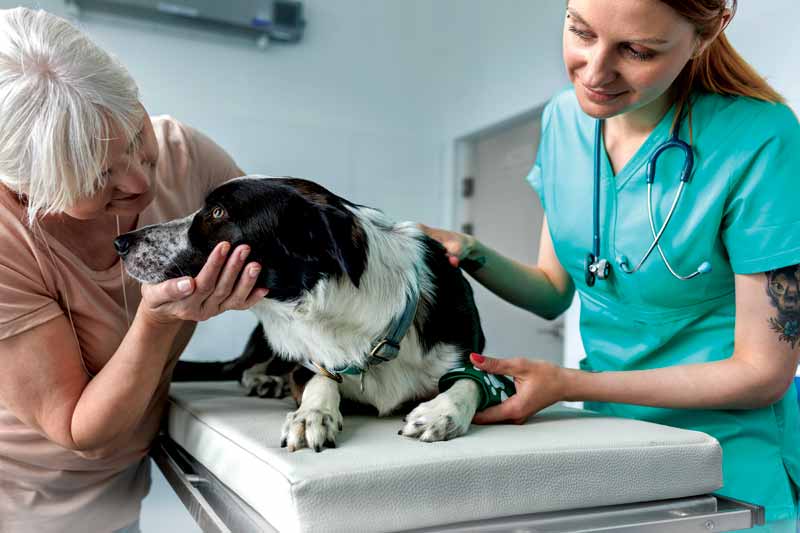
EOL conversations are understandably highly emotional. The clients can experience uncertainty, guilt, anticipatory grief, fear, and anxiety. Empathy and compassion are vital, so the client feels comforted and validated when making the decision to euthanize. Clients may ask, “Am I making the right decision?” “What would you do?” or say things such as, “I know it is the right thing to do, but it is just so hard.” Often, when clients ask if they are making the right decision, they are looking for permission to let go. The client needs to know that you, the veterinary professional, understand how hard the decision to euthanize is and that, based on your clinical knowledge and experience, humane euthanasia is warranted.
When clients ask what we would do in their situation, we need to explain that each situation is unique and what we might do (or ave done) with our own pets depended on that pet’s particular circumstances. The clients must decide what to do based on their pet’s unique circumstances. Again, we need to recognize and support the clients’ feelings and decisions, while also focusing on doing what is best for the patient in this situation.
When clients say they understand it is the right thing to do but it is difficult to go through with, we empathize. Let them know it is indeed a heartbreaking decision, but it is a decision made from love and concern for the pet’s welfare—just like every other decision they’ve made over the pet’s lifetime. This final, compassionate decision means honouring their pet’s good life by providing a good death.
Emphasizing the importance of time
It is far better to say goodbye a month too soon than a day too late. Waiting for red flags (cessation of eating, immobility, vocalizing, collapse, etc.) is waiting too long, and can lead to feelings of regret for the client.6 We need to move away from hollow and myopic phrases such as, “you’ll know when it is time” or, “as long as he’s eating and drinking, he’s ok.” Statements such as these:
- Place an unfair burden of responsibility on the client to decide when euthanasia is appropriate without providing guidance and education.
- Do not consider that, by the time a pet’s suffering or decline is clear and obvious to a client, the overall compromise has likely reached a critical point.
- Dismiss our evolving understanding that there are many aspects of a pet’s life beyond eating and drinking that provide fulfillment and quality, not to mention that some pets will continue eating until their final moments, despite the presence of significant, painful compromise in other areas.
The decision must be made when the time is right for the pet, not the client. Therefore, by planning ahead even if it feels “too soon,” clients can:
- Offer other family and friends the opportunity to say their goodbyes
- Provide a series of “final treats” or a “bucket list” for the pet
- Allow the pet to pass while still capable of recognizing the client’s presence, touch, and voice
- Provide a controlled, peaceful passing with the family present the entire time
- Avoid an emergency situation fraught with stress, fear, and anxiety for both the family and pet
Conclusion
One hour of conversation can alleviate weeks or months of uncertainty. There is an ever-increasing expectation from clients to provide a “good death” for their pets, but the phrase, “help me to help you” certainly applies. Veterinary professionals can provide a positive euthanasia experience as long as the clients have the knowledge and confidence to make the decision at the right time.
EOL consultations are not a perfect solution. There will still be clients who wait too long or who cannot bring themselves to make the decision to euthanize, resulting in prolonged or unnecessary suffering. Nevertheless, by providing these consultations, you will educate, prepare, and guide far more clients to provide the good death their pets deserve.
References
- Cori Bussolari, et al. “The euthanasia decision-making process: A qualitative exploration of bereaved companion animal owners”, Bereavement Care 37, no. 3 (2018): 104-105,
accessed 2 April, 2024, https://www.tandfonline.com/doi/full/10.1080/02682621.2018.1542571 - Anne Fawcett, “Mourning for Animals: A Companion Animal Veterinarian’s Perspective,” in Mourning Animals: Rituals and Practices Surrounding Animal Death, ed. Margo DeMello (Michigan State University Press: East Lansing, 2016), 173.
- Cindy L. Adams, Brenda N. Bonnett and Alan H. Meek. “Predictors of owner response to companion animal death in 177 clients from 14 practices in Ontario”, Journal of the American Veterinary Medical Association 9, no. 217 (2000): 1306, accessed 30 March, 2024, https://doi.org/10.2460/javma.2000.217.1303
- Jim Humphries, “When to shift from veterinary clinician to counselor: Focusing on compassion when your client’s pets are dying can go a long way”, March 29, 2017, https://www.veterinarypracticenews.ca/when-to-shift-from-veterinary-clinician-to-counselor/
- Lori R. Kogan and Kathleen A. Cooney. “Defining a “Good Death”: Exploring Veterinarians’ Perceptions of Companion Animal Euthanasia”, Animals 13, no. 2117 (2023): 2, accessed 28 March, 2024, https://doi.org/10.1080/02682621.2018.1542571
- “How to cope with the loss of a beloved pet.” BC SPCA website. September 4, 2023. https://spca.bc.ca/news/grieving-loss-pet/
Kirsten Grieve, RVT, currently works for Midtown Mobile Veterinary Hospice Services in Toronto. She holds a degree in Psychology and has worked in companion animal welfare and medicine for over 20 years. She has published scientific articles and presented internationally on topics including violence against animals, the disruption to veterinary medicine during the COVID-19 pandemic, the commodification of companion animals, and navigating end of life conversations.

Sign up for our newsletter
Get all the latest news and features from Veterinary Practice News Canada. Submit your email below to get our twice-monthly newsletter.
Popular Articles
-
1
-
2
-
3
-
4
-
5
Read the Latest Issue

