
Orca calf trapped in B.C. lagoon outwits rescuers
Rescue efforts have temporarily ceased
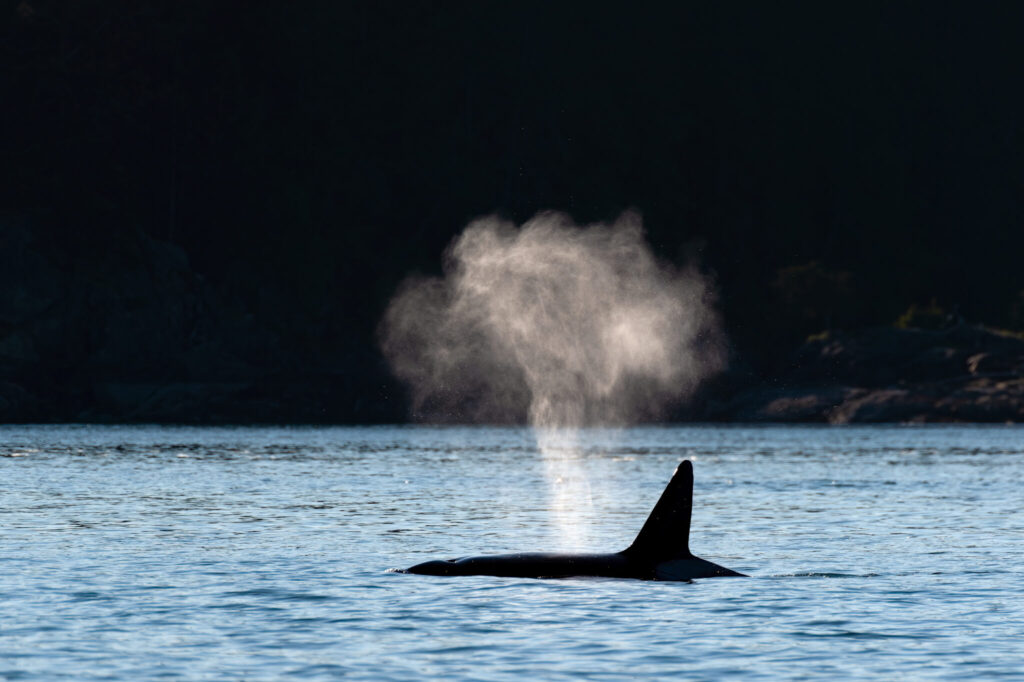
Despite multiple rescue attempts, a two-year-old orca calf stranded in British Columbia’s Little Espinosa Inlet, a remote 3-km (1.8-mi) Vancouver Island lagoon, has proved elusive to capture. The whale—who the Ehattesaht First Nation has named kʷiisaḥiʔis, meaning “Brave Little Hunter”—initially entered the lagoon with her pregnant mother, when they swam though a narrow and fast-moving channel connecting to the ocean. However, kʷiisaḥiʔis’ mother died on March 23, after being beached at low tide.
Previous rescue efforts used noise-making devices and underwater barriers to guide the calf towards the capture site. The fisheries department—who has been working on the rescue with the Ehattesaht First Nation—says the most recent plan was to “put her in a sling, and transfer her by truck onto a landing barge which would transport her the 19 km (11.8 mi) to the open ocean for release.”
The operation enlisted six vessels and up to 50 personnel and involved coaxing the calf into the shallows—using sounds produced by banging pipes underwater, as well as a wall created using a series of lines. However, the noise makers seem to have little effect on the calf.
In conversation with The Canadian Press, Martin Haulena, DVM, MSc, Dipl. ACZM, said, “It does appear like she has been getting quite used to the noise, to the boats and the pipe. So, those did not deter her in the direction that folks wanted her to move.”
Plans for a new strategy, possibly involving purse seine netting in deeper lagoon sections, are under consideration, though risks to both the calf and rescuers necessitate careful planning. No date has currently been set for the next rescue. In a recent statement, fisheries department spokesperson Lara Sloan said, “There are a lot of moving parts to organize in such a complex operation.”
Although the fish in the lagoon—species such as salmon, perch, ling cod, and rockfish—would be an unconventional diet for a Bigg’s killer whale, Haulena suspects kʷiisaḥiʔis may be feeding on them.
He said, “(The calf) didn’t seem to be in terrible body condition. Actually, she has been maintaining body conditions quite well. It looks like she is also quite active diving for prolonged periods of time, you know, six to eight minutes.”
While people have offered seal caracasses, Haulena does not believe anyone has seen her eat them, though a report from the fisheries department suggests she may have eaten a duck.
Sign up for our newsletter
Get all the latest news and features from Veterinary Practice News Canada. Submit your email below to get our twice-monthly newsletter.
Popular Articles
-
1
-
2
-
3
-
4
-
5
Read the Latest Issue

