
Five ways clinics can help fight burnout
There is innovation coming from within the field, and we are seeing real and practical change happen at the ground level
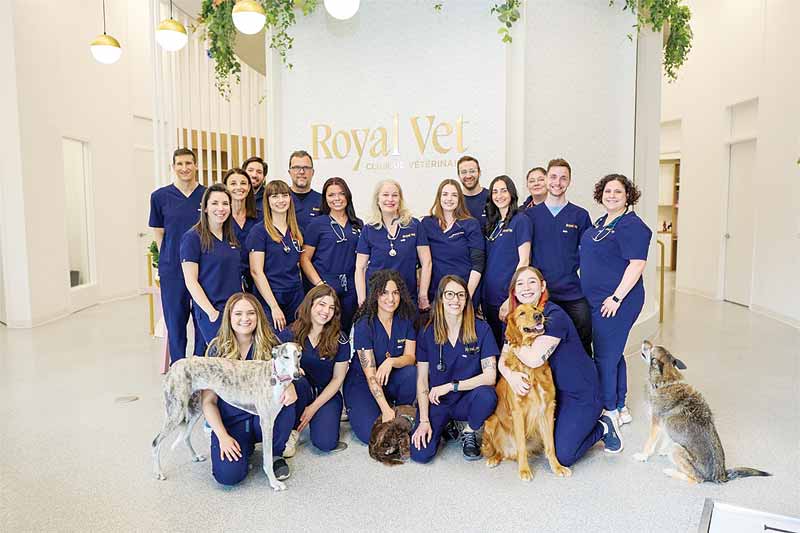
Photo courtesy Royal Vet
Veterinary burnout has emerged as a pressing issue within the industry, calling for immediate action. The demanding nature of veterinary work, combined with long hours, emotional strain, and the weight of responsibility, places significant stress on animal healthcare professionals. Indeed, burnout factors are driven by excessive workloads, imbalance between job demand and skills, lack of autonomy, and prolonged work-related stress.1
The World Health Organization (WHO) defines burnout as an “occupational phenomenon,” characterized as a syndrome resulting from chronic workplace stress. In a recent survey, 86.7 per cent of American veterinarians identified as having burnout scores in the moderate or high range.2
Further, the turnover rate among veterinary technicians is 23.4 per cent per year and, for DVMs its 16 per cent, according to a 2020-conducted survey by the American Animal Hospital Association (AAHA).3 This reality comes at a great financial loss to practices, along with a significant emotional cost to veterinary workers.
Sadly, the trend of burnout is increasing with time, and its impact goes beyond the individual. When considering the economic health of the industry, the issue impacts both sides of the market, lowering consumer and veterinary professional welfare. While there are no specific studies on clinical case management, it would not be a stretch to suggest patient care is negatively affected, too.
We often talk about individual management of burnout (with ensuring work-life balance at the forefront); however, industry-wide action will, without a doubt, better address this growing problem. It is imperative we prioritize the well-being of veterinary professionals to ensure these skilled workers can continue to provide the exceptional care and compassion that defines our noble profession.
By offering comprehensive support in five key areas, practice managers can work wonders in uplifting team members and empowering them to provide exceptional care. Ultimately, when this is accomplished, everyone benefits: staff, clients, and, most importantly, patients.
Address staff burnout, mental health
Montréal veterinary clinic Royal Vet conducted a very interesting in-house survey among veterinary professionals and their clients. The practice asked 100 team members if they were aware of burnout—all 100 were. It then asked 100 pet owners if they were aware of veterinary burnout—only three were.
Prioritizing staff can improve relationships with clients by informing them of the realities of practice. Therefore, understanding the toll certain aspects of the veterinary profession can take on individuals helps ensure team members feel supported for their efforts. A vital pillar of this idea includes offering competitive salaries, comprehensive health benefits, and retirement plans for team members. This is particularly important for technicians and support staff, as many of these professionals find the revenue they help generate is generally unmatched to their salaries.
Additionally, the implementation of a confidential employee assistance program (EAP) provides team members access to counselling and support services, allowing staff members to better navigate the challenges they may encounter and, in turn, promoting a healthier work-life balance.
Cultivate a positive work environment
Placing the subject of mental health at the forefront encourages team members to be open and honest about what they are feeling and experiencing. By creating a space where workers can express themselves and feel confident that management will take an empathetic approach to problem solving, most issues can be resolved effectively. This creates a positive track record, which encourages team adhesion and fosters an uplifting environment. (It’s not a stretch to suggest this will decrease staff turnover rates.)
Beyond mental and emotional well-being, it is also imperative to create suitable physical spaces within the clinic. Providing comfortable workstations and a dedicated break room acknowledges the importance of creating a space that promotes physical and mental wellness. These efforts not only boost staff morale, but also contribute to increased job satisfaction.
Personalized meetings
To further prioritize well-being, practice managers should consider actively engaging in personalized meetings with team members to ensure an employee’s duties aligns with their personal and professional goals. Additionally, offering continuing education (CE) budgets for veterinarians, technicians, veterinary assistants, and front-end team members encourages ongoing learning and development, enabling these professionals to enhance skills and expand their knowledge within the field. These efforts not only promote career advancement, but also serve as a powerful tool in combating burnout by fostering a sense of growth and fulfillment for those working in every position within the practice.
Enhancing client experience
In many ways, client experience and employee well-being are inter-linked. Among the more innovative ideas in this regard is the streamlining of certain processes, such as offering receptionists and technicians a hybrid work-from-home schedule (which, in a post-COVID world, is a model that has taken centre stage). In addition to being largely favoured by staff, this approach can work wonders in minimizing client wait times—truly a win-win. Access to online pet records, facilitated insurance claim procedures, and a concierge service all contribute to a seamless and personalized customer experience.
By investing efforts into client satisfaction, a clinic can foster strong relationships, promote positive word-of-mouth, and establish itself as a trusted partner in the well-being of veterinary team members, pet owners, and patients.
Progression of industry
By and large, setting (and upholding) a new standard for clinic management that places staff well-being at the forefront is indicative of a dedication to progress and innovation within the industry. Through the adoption of this approach, practices lead by example, inspiring others to embrace similar policies and create positive change within the industry. This can, effectively, re-shape the landscape of veterinary medicine, ensuring a healthier and more sustainable future for all professionals within the field.
Indeed, there are new ways of doing veterinary medicine. There is innovation coming from within the field, and we are seeing real and practical change happen at the ground level. Through the continued dedicated efforts on the part of all clinics, the animal healthcare industry can inspire hope and drive positive change, paving the way for a healthier and more fulfilling future for all veterinary professionals.
Alexandra Yaksich, BSc., AHT, wears many hats. She is currently working as a freelance writer, communications consultant, content creator, and relief animal health technician. Follow her on Instagram (@alexandra.yaksich) or connect with her via LinkedIn.
References
1 National Academies of Sciences, Engineering, and Medicine; National Academy of Medicine; Committee on Systems Approaches to Improve Patient Care by Supporting Clinician Well-Being. “Taking action against clinician burnout: A systems approach to professional well-being.” 2019 Oct 23. doi:10.17226/25521. https://pubmed.ncbi.nlm.nih.gov/31940160
2 Neill CL, Hansen CR, Salois M. “The economic cost of burnout in veterinary medicine.” Front Vet Sci. 2022; 9. doi: 10.3389/fvets.2022.814104. https://www.ncbi.nlm.nih.gov/pmc/articles/PMC8913590
3 Hopkins C. “Listening helps: Vet student seeks answers in burnout survey.” American Animal Hospital Association. 18 Jan 2023. https://www.aaha.org/publications/newstat/articles/2023-1/listening-helps-vet-student-seeks-answers-in-burnout-survey

Sign up for our newsletter
Get all the latest news and features from Veterinary Practice News Canada. Submit your email below to get our twice-monthly newsletter.
Popular Articles
-
1
-
2
-
3
-
4
-
5
Read the Latest Issue

