
Making the link between team health, telemedicine, and GI diagnosis
Let’s look a little closer at the challenges of uncomplicated mild acute gastrointestinal (GI) problems, and some unique strategies to address the issues
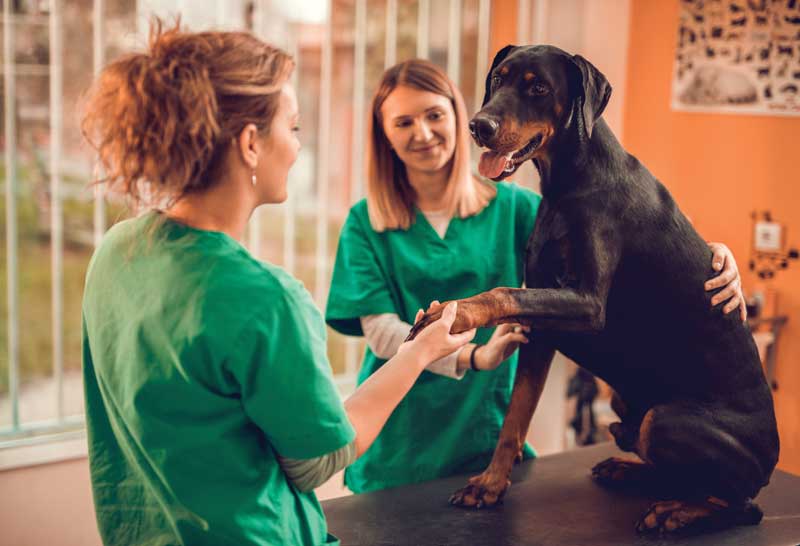
Discussions about the worldwide shortage of veterinary personnel are ubiquitous in the media and at veterinary conferences. Not only are there widespread challenges with burnout and decreased job satisfaction, it is increasingly difficult to recruit and retain veterinary team members. While already a problem before the pandemic, issues have been exacerbated by the influx of new clients and pets, particularly with many of them being first-time pet owners.
Let’s look a little closer at the challenges of uncomplicated mild acute gastrointestinal (GI) problems, and some unique strategies to address the issues.
Mental health and the impact on retention
We are increasingly paying attention to mental health and work-life balance for all veterinary team members. Many studies have found increased levels of burnout and decreased levels of job satisfaction among veterinary team members, particularly veterinary technicians. An earlier study looking at burnout in veterinary teams found 22.4 per cent of those surveyed were in the high risk category for exhaustion, 23.2 per cent were high risk for cynicism, and 9.3 per cent were high risk for decreased professional efficacy.1 A 2017 American Veterinary Medical Association (AVMA) study found up to 49 per cent of veterinary professionals experience moderate to severe burnout at work.2
More recent studies have found similar findings.3 In fact, a 2020 study found 58.3 per cent of the 1,642 veterinary technicians surveyed were in the high risk threshold for emotional exhaustion.4 As might be expected, studies after the pandemic have found similar results, since contributions to burnout are related to excessive workload, long work hours, lack of respect, lack of recognition, client expectations, and poor team communication.5
Unfortunately, in numerous industries, research has shown job dissatisfaction and burnout lead to increased turnover/decreased retention. According to an American Animal Hospital Association (AAHA) 2020 Compensation and Benefits report, the average yearly veterinary team turnover rate is 23 per cent. It’s actually even higher for veterinary technicians, receptionists, and staff other than managers and veterinarians—up to 32.9 per cent.6 This is in contrast to the turnover rate of 9-13 per cent for industries worldwide.7 Note, this was before the pandemic.
The Brakke Consulting presentation at the January 2023 VMX conference indicated more than
70 per cent of veterinary teams had a higher turnover rate in 2022, with 60 per cent failing to reach their hiring goals.8 As well as causing increased stress to the remaining veterinary team, the impact of increased turnover and insufficient staff influences the clinic’s bottom line. The cost to replace a staff member is considered to be approximately 20 per cent of their salary. However, as indicated earlier, a major contributor to burnout is excessive workload. Having insufficient staff to look after the patient load causes increased stress and can contribute to medical errors.3
Research has identified dissatisfaction and stress at the individual level to be associated with substance abuse, burnout, turnover, and reduced psychological wellbeing in numerous health professions.1 Dissatisfaction and stress influence an individual’s physical health (e.g. cardiovascular disease and musculoskeletal disorders) and psychological wellbeing (e.g. anxiety and depression).1
So, what can we do to help? One strategy to address retention is to improve workplace culture. This involves effective communication, mutual respect, psychological safety, and having goals the entire team buys into. Giving team members increased responsibilities and accountability encourages a growth mindset and improves job satisfaction. A positive team culture has also been shown to benefit patient outcomes.
Why it’s important to engage the entire team
We are now moving away from vet-centric client communication. We know veterinary medicine is more effectively delivered by a veterinary health care team.1 An important component of this is ensuring client communication is consistent across the whole team. The benefits include increased client satisfaction, increased trust and respect by the client, improved team productivity, and better health outcomes for the pet.
A lack of recognition and respect has been identified as an issue contributing to burnout.1,5 However, clients are more satisfied when they receive a consistent message reinforced by all team members, establishing their trust in and respect for the veterinary team. In turn, such trust and respect increase engagement by the team, as they feel valued not only by clients, but also by their fellow team members.5
Having consistent communication by all team members also improves productivity, as everyone—from the first to the last point of contact—delivering the same message saves time during appointments. Finally, accurate and consistent communication with team members is associated with decreased medical errors, having a positive impact on patients.9,10
A new tool in your toolbox
Given the workplace challenges being faced by clinics to address critical and urgent cases, it is even more difficult to fit in less urgent appointments. Many clinics are scheduling wellness appointments weeks and even months in advance. Emergency visits are also not always an option—they tend to cost more and, given the increased demand, some clinics won’t even see pets unless they have been screened first. There is also a higher demand for visits from first-time pet owners. Many of these clients have never dealt with sick pets before. These stressed clients want problems fixed immediately. If unable to get into the clinic, they will turn to “Dr. Google” or social media for answers. The inclusion of all team members in the management of non-urgent conditions can lessen the burden of patient load at the clinic and offer clients a satisfying veterinary care experience.
One strategy to help alleviate heavy workloads in the clinic is the use of telemedicine. It is important to note that virtual care does not just involve tools such as Smartvet and Zoom. It also includes modalities such as phone calls, emails and text employed either synchronously or asynchronously. More veterinary clinics became familiar with telemedicine during the pandemic, when everyone had to adapt the way they provided care. An article published in the August 2023 issue of the Journal of the American Veterinary Medical Association found the telephone was the most common remote modality used, with 83.6 per cent using it before the pandemic and 97 per cent during the pandemic.11 Many veterinary associations, including the AVMA and Canadian Veterinary Medical Association (CVMA), recommend using telemedicine responsibly. Benefits include meeting pet owner demand for timely services, helping address the worldwide shortage of veterinary personnel, and even providing access of veterinary services to under-served communities.
The good news is that recent research shows virtual care is successfully being used to treat many types of appointments. For instance, the Ontario Veterinary Medical Association (OVMA) survey of Canadian pet owners found that approximately
75 per cent of pet problems seen for virtual appointments can be treated through virtual care alone. Similarly, a clinical audit by Royal College of Veterinary Surgeons (RCVS) concluded that 89 per cent of treatments prescribed via virtual care fully resolved the issue or resulted in the anticipated response. Mild stomach upset was listed as one of the medical conditions veterinarians can address virtually.
Pet owners also appear to be open to telemedicine. An American Society for the Prevention of Cruelty to Animals (ASPCA) national survey found 69 per cent of the respondents who were unable to access veterinary care in the past two years indicated they were interested in utilizing veterinary telemedicine. Further, 66 per cent of the respondents reported they would see a veterinarian more often if telemedicine were available.12

A change to the traditional approach to mild GI acute upset
Uncomplicated acute diarrhea in dogs is most frequently associated with abrupt dietary changes or dietary indiscretion (“garbage gut”), food hypersensitivity, transient uncomplicated bacterial/viral infections, parasites, stressful events, and medication side effects or adverse reactions—including antimicrobials. Most of these patients do not undergo diagnostic tests during their initial presentation and the exact cause is rarely determined in clinical practice, most cases being self-limiting.13 Despite this, antibiotics are still frequently used as first-line therapy for acute mild diarrhea.14
Unfortunately, antimicrobial use can lead to profound changes in the microbiome. The microbiome is the full collection of micro-organisms, their genes, and the habitat in a specific area of the body. An imbalance of the microbiome causes dysbiosis, which is an integral part of the pathogenesis of both acute and chronic GI disorders.
Gut dysbiosis in humans has been associated with the subsequent development of numerous diseases such as GI infections, chronic enteropathies, obesity, diabetes, allergy, autoimmune conditions, and cognitive impairments. Microbiome imbalance in animals also leads to dysbiosis, which can lead to the production of harmful bacterial toxins and a reduction in anti-inflammatory metabolites. It can also destroy brush-border enzymes, damage carrier proteins, cause competition for nutrients, and increase enterotoxin production. Diarrhea and altered intestinal permeability often result.
Many peer-reviewed articles have evaluated the short- and long-term effects of administering antimicrobials in healthy dogs and in dogs with uncomplicated acute diarrhea. For instance, the fecal dysbiosis index significantly increased in healthy dogs receiving metronidazole, indicating significant alterations in the microbiome structure and diversity, with some changes remaining up to four weeks after completion of antibiotic administration.15
A new GI tool
Fortunately, there are now alternatives that not only resolve mild GI upsets without causing harm, but also can involve the entire veterinary team. A new acute GI screening tool helps triage appointment booking and guide the use of low-harm therapies ahead of an in-person visit.
This screener is aimed at both dogs and cats who are experiencing acute gastrointestinal events. It can be used by the first point of contact at the clinic, whether that be the client services representative, the veterinary assistant, registered veterinary technician, or veterinarian. It can easily be completed over the phone when a concerned client calls in for their pet who is experiencing an acute GI upset.
The screener includes basic questions about the pet, their overall wellness, and the diarrhea symptoms the pet is experiencing. Once completed, the team member can simply follow the clinic’s protocol by having the appropriate personnel review the answers. This will speed up the process to determine if the patient needs to be seen immediately in the event of a more serious GI event, either in the clinic or by referral to an emergency clinic. In other cases, the patient can be started on a no-harm therapy, such as a medical-grade clay which will provide a fast resolution of the GI upset without the use of antimicrobials and without overburdening the clinic with another appointment.
It is often advisable to set up an appointment for a re-check in advance, although in some cases the diarrhea may have already resolved. Follow-up can be done by a team member using telemedicine, based on the protocol applied at the clinic. It can also be useful to monitor the status of the pet during follow-ups.
This practical tool can be used with all sizes of clinics as it can be adapted to existing protocols. While not a validated diagnostic tool, it will help the veterinary team triage the patient, and determine whether the issue can be solved using products the client can pick up from the clinic. By providing appropriate therapy, the patient’s diarrhea is likely to resolve more quickly without harm, leading to a healthier patient and a more satisfied client. It can also be useful when doing follow-ups to monitor the status of the pet.
The inclusion of the entire veterinary team in the management of non-urgent conditions can offer a satisfying veterinary care experience to your clients and lessen the burden of patient load at your clinic. The client receives a consistent message from the veterinary team and feels relieved the problem is being addressed quickly. The veterinary team feels they are contributing to the shared goal of providing exemplary care to patients, which helps enhance their sense of professional efficacy. And last, but certainly not least, the patient receives care more quickly, leading to better health outcomes.
Irene Moore, DVM, is a 1986 graduate of the Ontario Veterinary College. After working in mixed animal practice, she has worked at the University of Guelph, Ridgetown Campus since 1994. She has held leadership roles in veterinary and veterinary technology education organizations and has been honoured with several awards for her contributions to the veterinary profession.
The “GI Upset Screener” is available for download at Grey Wolf Animal Health’s website: https://products.greywolfah.com/gi-upset-screener/
References
1 Moore IC, Coe JB, Adams CL, Conlon PD, Sargeant JM. The role of veterinary team effectiveness in job satisfaction and burnout in companion animal veterinary clinics. J Am Vet Med Assoc. 2014 Sep 1;245(5):513-24. doi: 10.2460/javma.245.5.513. PMID: 25148093.
3 Hayes GM, LaLonde-Paul DF, Perret JL et al. Investigation of burnout syndrome and job-related risk factors in veterinary technicians in specialty teaching hospitals: a multicenter cross-sectional study. J Vet Emerg Crit Care. 2020;30:18–27. https://doi.org/10.1111/vec.12916
4 Kogan LR, Wallace JE, Schoenfeld-Tacher R, Hellyer PW and Richards M (2020) Veterinary Technicians and Occupational Burnout. Front. Vet. Sci. 7:328.doi: 10.3389/fvets.2020.00328
5 Ashton-James CE, McNeilage AG. A Mixed Methods Investigation of Stress and Wellbeing Factors Contributing to Burnout and Job Satisfaction in a Specialist Small Animal Hospital. Front Vet Sci. 2022 Jun 24;9:942778. doi: 10.3389/fvets.2022.942778.
7 Linked In Globally July 2021-June 2022; https://www.vetport.com/staff-retention
8 https://www.avma.org/news/report-animal-health-industry-experiencing-highly-competitive-labor-market
9 West CP, Dyrbye LN, Shanafelt TD. Physician burnout: contributors, consequences and solutions. J Intern Med. 2018;283: 516-529
10 Salyers MP, Bonfils KA, Luther L, et al. The relationship between professional burnout and quality and safety in healthcare: a meta-analysis. J Gen Intern Med. 2017;32:475-482.
11 Sigesmund D, Coe JB, Khosa D, Moore IC. Veterinarians are reluctant to recommend virtual consultations to a fellow veterinarian. J Am Vet Med Assoc. 2023 Aug 9:1-9. doi: 10.2460/javma.23.02.0090. Epub ahead of print. PMID: 37562777.
12 ASPCA national public survey on access to veterinary care & telemedicine. American Society for the Prevention of Cruelty to Animals. March 15, 2023. Accessed April 10, 2023. https://aspca.app.box.com/s/prwqamoynk8a6anq5hy7j77d4ug21bjf
13 Herstad HK, et al. Effects of a probiotic intervention in acute canine gastroenteritis – a controlled clinical trial. J. Small Animal Practice. 2010; 51: 34-38.
14 German A.J., Halladay L.J., Noble P.-J.M. First-choice therapy for dogs presenting with diarrhoea in clinical practice. Vet. Rec. 2010;167:810–814. doi: 10.1136/vr.c4090. – DOI – PubMed
15 Manchester AC, Webb CB, Blake AB, et al. Long-term impact of tylosin on fecal microbiota and fecal bile acids of healthy dogs. J Vet Intern Med 2019;33:2605-2617.
Sign up for our newsletter
Get all the latest news and features from Veterinary Practice News Canada. Submit your email below to get our twice-monthly newsletter.
Popular Articles
-
1
-
2
-
3
-
4
-
5
Read the Latest Issue

