
How cat parents are driving veterinary innovation
The rise of consumer-led technology adoption
A new paradigm is emerging where informed pet owners are becoming the primary drivers of practice management technology adoption.
Love it or hate it, the Canadian veterinary landscape is shifting. Traditional adoption models—where innovations flow from professional conferences to gradual practice implementation—are being disrupted by an unexpected force: informed pet owners themselves and the technology that they are embracing on a consumer level.
The consumer-technology bridge
In my experience working with veterinary clinics globally, I’m seeing a new adoption pattern emerge: digitally native pet owners are arriving at clinics already familiar with AI-powered assessment tools, using AI and search tools to understand their pet’s health needs. Many of our clinic users for our AI solution have asked for integration into their existing pet-to-vet practice management systems—creating immediate demand driven by informed consumers rather than professional recommendations.
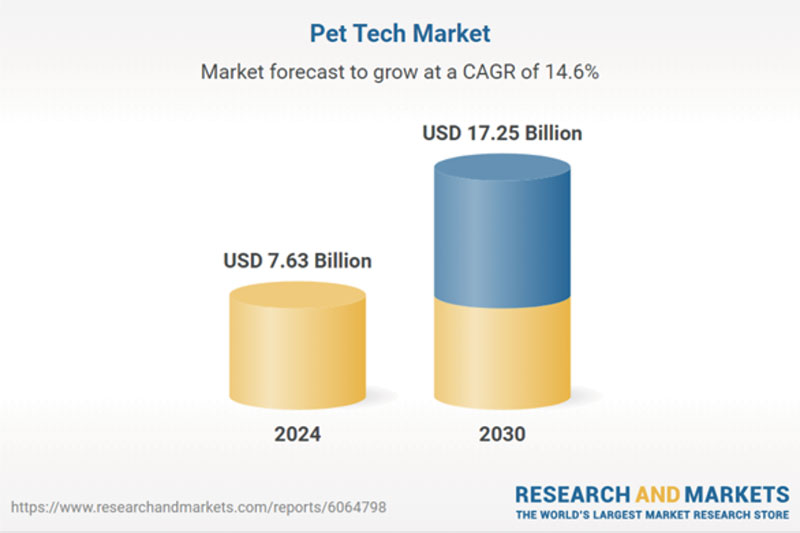
We know that the pet tech market has exploded to $7.63 billion in 2024, driven by post-pandemic pet ownership and growing demand for preventive care solutions.
Pet owners are increasingly embracing AI-powered tools that provide objective health insights—think everything from monitoring systems that analyze behavioural patterns and vital signs for early illness detection, smart wearables like GPS-enabled collars and monitoring devices
(the largest market segment), integrated smart home solutions, including video and monitoring systems that include real-time pet behaviour alerts, as well as mobile applications offering comprehensive health tracking and AI-powered photo-based assessments.
This bottom-up technology adoption represents a fundamental shift in cat owner education. Rather than practicing educating clients about new capabilities, informed pet owners are actively requesting specific technological solutions and driving professional adoption through direct demand.
Veterinary professionals are, of course, mindful of what’s actually going to move practices forward and help animals, and what is simply more tech-noise and/or software that the industry is trying to sell them.
The veterinary practice challenge
Canadian veterinary practices face a complex reality: 50 per cent of pet owners skipped needed veterinary care in the past year. The reasons? Financial barriers, not wanting to traumatize cats in particular with unnecessary trips, and simply not knowing when care is needed. This leaves practices with finding innovative ways to maintain client engagement while managing capacity constraints and rising costs.
For feline patients, this challenge is amplified by cats’ evolutionary programming to mask pain and illness. Traditional approaches often result in cats being seen only when conditions reach emergency status—creating unpredictable workflow demands and suboptimal outcomes.
The economic impact is significant. According to Gallup News, 8.2 million cats in Canadian households—outnumbering dogs by more than a million—and 50 per cent of Canadian pet owners have skipped needed veterinary care in the past year due to financial barriers. Practices are missing substantial revenue opportunities while failing to provide optimal preventive care for this large patient population. The challenge is particularly acute for feline patients, who have evolved to mask pain and illness, making regular professional assessment even more critical.
AI tools as practice extenders
Artificial intelligence applications in veterinary practice management offer Canadian practices something unprecedented: the ability to extend clinical expertise beyond physical facility constraints without proportional increases in staffing overhead.
We know that AI-powered assessment tools can achieve remarkable accuracy in pain detection and health monitoring through smartphone-based analysis.
For practices, this creates multiple operational advantages:
- Capacity management: Remote monitoring capabilities enable practices to maintain oversight of patient populations between scheduled visits, identifying cases requiring intervention while optimizing appointment scheduling.
- Preventive care enhancement: Early detection capabilities shift patient interactions from emergency-driven to preventive-focused, creating more predictable workflow patterns and improved patient outcomes.
- Staff efficiency: AI-assisted assessment tools provide objective data that supports clinical decision-making while reducing time spent on subjective evaluations during appointments.
- Client engagement: Regular remote monitoring strengthens the veterinarian-client relationship through consistent touchpoints, building loyalty while providing data-driven insights that support treatment recommendations.
The implications for practice management are profound:
- Workflow integration: Pet owners familiar with remote monitoring technologies expect seamless integration with practice management systems, creating pressure for interoperability and data sharing capabilities.
- Client communication: Technology-savvy clients arrive with objective data and specific questions, requiring practices to adapt communication protocols and staff training accordingly.
- Revenue optimization: Consumer-driven technology adoption creates new revenue streams through subscription-based monitoring services while improving client retention through enhanced engagement.
The future of practice management
Forward-thinking practices are discovering that AI-powered tools don’t replace veterinary expertise—they amplify it. By enabling remote monitoring and early detection, these technologies allow veterinarians to provide more comprehensive care while optimizing practice efficiency.
The key to successful implementation? Recognizing that technology adoption is increasingly consumer-driven. Practices that effectively integrate consumer-preferred technologies into their workflows while maintaining clinical standards will thrive in this evolving landscape.
Cutting through the tech noise
So how do vets navigate to find the right tools? As a pet caregiver with decades of experience in animal care and agriculture, my main driver in founding an AI-based company for cats was ensuring the technology was continually tested and developed by veterinarians, behaviourists and leading computer vision experts. We have demonstrated 89 per cent precision in our product, and continue to train with labelled data sets from medicalized cats through data licensing agreements with shelters.
When considering AI and new technology to drive your clinic forward, here are key recommendations to help you properly vet the vet-tech:
Key recommendations for feline-specific technology practice adoption
For veterinary practices considering AI integration:
- Start with targeted feline client education: Begin implementation with cat-owning clients who have expressed concerns about their pet’s comfort or have cats with chronic conditions. Educate clients on how remote patient monitoring can provide objective data between visits, emphasizing that this technology specifically addresses cats’ natural tendency to hide pain and discomfort.
- Implement graduated assessment protocols: Establish clear protocols for when clients should use the patient monitoring tools, such as weekly monitoring for senior cats, post-surgical recovery tracking, or when behavioural changes are noticed. Create decision trees that help both staff and clients understand when app results warrant immediate consultation versus routine monitoring.
- Integrate assessment data into clinical workflows: Train veterinary teams to interpret remote patient monitoring alongside traditional clinical examinations. Develop standardized documentation processes for incorporating remote patient assessments into patient records, ensuring continuity between remote monitoring and in-clinic evaluations.
- Create proactive care pathways: Use the AI-powered technology’s capabilities to shift from reactive to preventive care models. Establish protocols for follow-up when assessments indicate developing issues, creating opportunities for early intervention that can prevent emergency visits and improve patient outcomes.
- Develop client communication frameworks: Train staff to discuss AI-powered tools with clients, explaining what the benefits are in practical terms and how to interpret results. Create communication templates that help explain when remote assessment data supports continued monitoring versus when it indicates the need for professional evaluation.
- Establish revenue models for technology-enhanced care: Develop pricing structures for monitoring plans that reflect the enhanced value of technology-assisted care, follow-up consultations based on app data, and preventive care recommendations. Consider subscription-based models that provide ongoing value while generating predictable revenue streams.
- Ensure seamless practice management integration: Work with your practice management software provider to ensure remote patient assessment data can be automatically imported into patient records. This integration eliminates duplicate data entry while creating comprehensive health timelines that combine remote monitoring with clinical visits.
- Build referral networks through technology demonstration: Use AI-powered tech capabilities as a referral tool for specialist consultations, providing concrete data that supports treatment decisions and helps communicate patient status to specialists or emergency clinics.
Susan Groeneveld, B.Sc. (Ag), is the founder and CEO of a Calgary-based AI company revolutionizing feline healthcare through smartphone-enabled pain detection technology. With over 25 years of experience in animal health and agriculture, she has built strategic partnerships with veterinary organizations across North America, Europe, and Asia. Groeneveld was recognized as a top five finalist for Women in AI’s Entrepreneur of the Year across North America in 2023 and is a graduate of the Birthing of Giants Fellowship Program. Her mission to bridge the gap between cat caregivers and veterinary professionals has resulted in technology now used by thousands of pet caregivers and supported by veterinary professionals worldwide.

Sign up for our newsletter
Get all the latest news and features from Veterinary Practice News Canada. Submit your email below to get our twice-monthly newsletter.
Read the Latest Issue

