
5 Questions with … Justin Rosenberg, DVM, manager of Wildlife Health Operations at the Toronto Zoo
Toronto Zoo's Dr. Justin Rosenberg takes a wild approach to animal care.
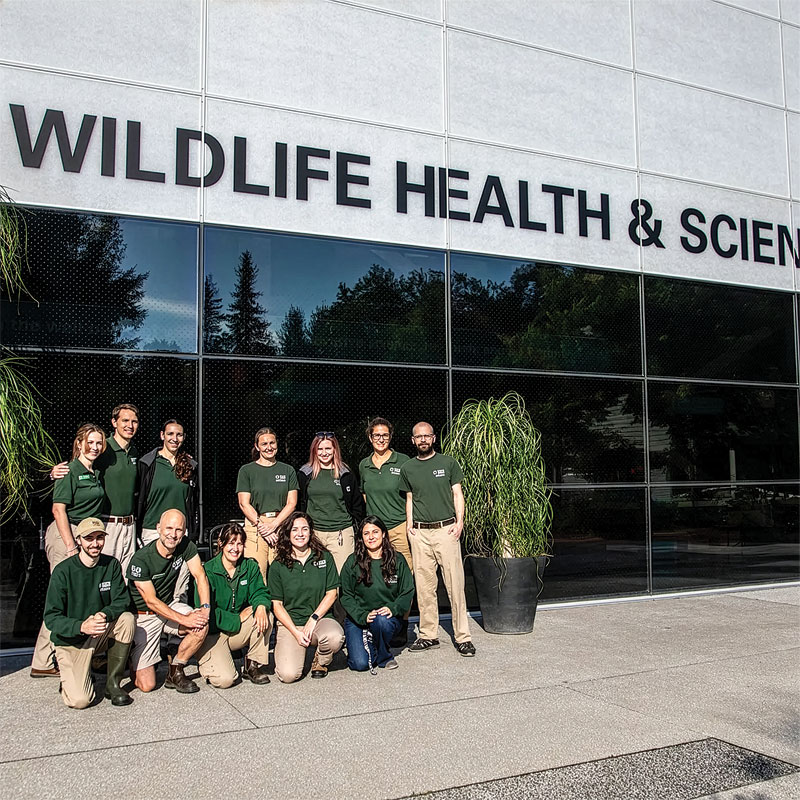
Exploring the interesting and sometimes wild world of veterinary medicine outside the four walls of a clinic reveals a profession that extends far beyond the exam room. Sometimes, that work takes veterinarians to a zoo, where a patient may weigh only a few grams, several tonnes, or belong to a species they have never encountered before. At Toronto Zoo’s Wildlife Health & Science Centre, veterinary care meets conservation, research, and public education.
In this interview with Veterinary Practice News Canada, Dr. Justin Rosenberg shares how the Centre’s team approaches the health needs of animals, ranging from fish to large mammals, while contributing to the well-being of wildlife populations, ecosystems, and people. Its work is grounded in a One Health perspective, bringing veterinarians together with wildlife care professionals and specialists to make informed decisions.
1) Toronto Zoo’s Wildlife Health & Science Centre sits at the intersection of veterinary medicine, conservation, and research. How does your team collaborate across disciplines to improve health outcomes for wildlife, and what lessons from that collaborative approach could be applied in companion animal or mixed veterinary practice?
At the Toronto Zoo, we utilize a One Well-being approach that encompasses health, nutrition, and welfare in collaboration with our wildlife care partners (keepers). We rely on our experts in each domain to help guide informed decision-making for each situation that arises. In non-zoo practice, having a collaborative, holistic approach where information sharing opens lines of communication could lead to improved welfare. It would be important to discuss topics such as the responsible use of antimicrobials and dewormers, preventive medicine (vaccination), and general trends in animal health related matters.
2) From your perspective, why should practicing veterinarians care about wildlife medicine, and how does your team’s work contribute to a broader One Well-being approach?
Wildlife health has widespread impacts for all of us. From free-ranging moose to the raccoons raiding trash bins, to the bees pollinating our flora. Wildlife serve as sentinels of ecosystem health, and awareness of their overall status can serve as an early warning sign of things to come. This allows for risk assessment and risk mitigation before human health is impacted. Living every day at the forefront of the human-wildlife interface, veterinary professionals have an opportunity to identify emerging diseases and take appropriate action to reduce the risk of zoonoses. Further, some of the often-overlooked wildlife species play important roles in maintaining biodiversity. Imagine the widespread impacts of losing pollinators, seed dispersers, and scavengers…
3) Your team cares for a diverse range of species, each with unique physiological and behavioural needs. What are some of the biggest diagnostic or medical challenges you encounter, and how has working with such a wide range of animals shaped your approach to veterinary medicine and clinical decision-making?
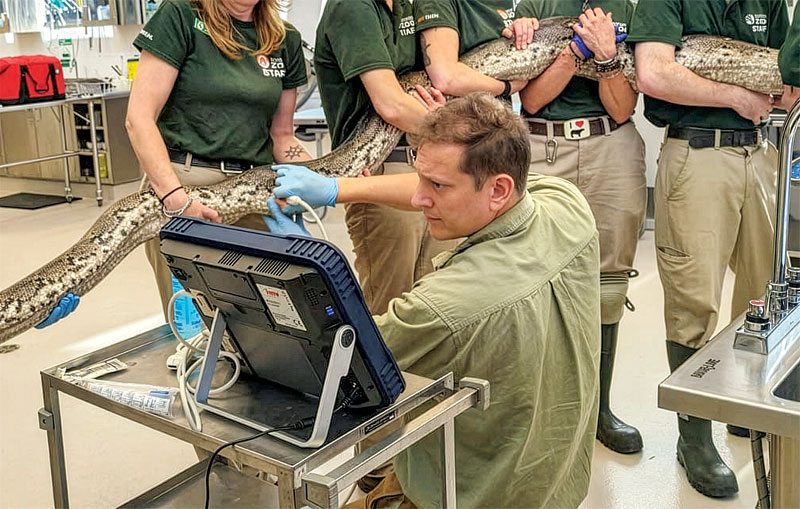
Personally, I feel the best part of specializing in non-domestic species is constantly having to think outside the box. Knowing what we want to do is only half the battle … figuring out how to make it happen is the fun part. Some of the challenges we face on a day-to-day basis involve patient size. Working on species that can range in weight from only a few grams up to several tonnes makes each situation a unique endeavour. We also need to consider the natural behaviour as part of our treatment plan; it is not realistic to keep a fish out of water while it heals from surgery. We find unique ways to provide top-quality care to each animal housed at Toronto Zoo.
Working with such a wide range of animals can be quite humbling. There were times early in my career when I would be presented with a species I had never known existed until it became a patient. We also lack normal reference ranges for many species, so we must have a solid foundation in domestic species to appropriately extrapolate to non-domestic species. Zoo medicine is as much an art as it is a science.
4) Can you describe how your work at the Wildlife Health & Science Centre ultimately benefits the veterinary profession and the public?
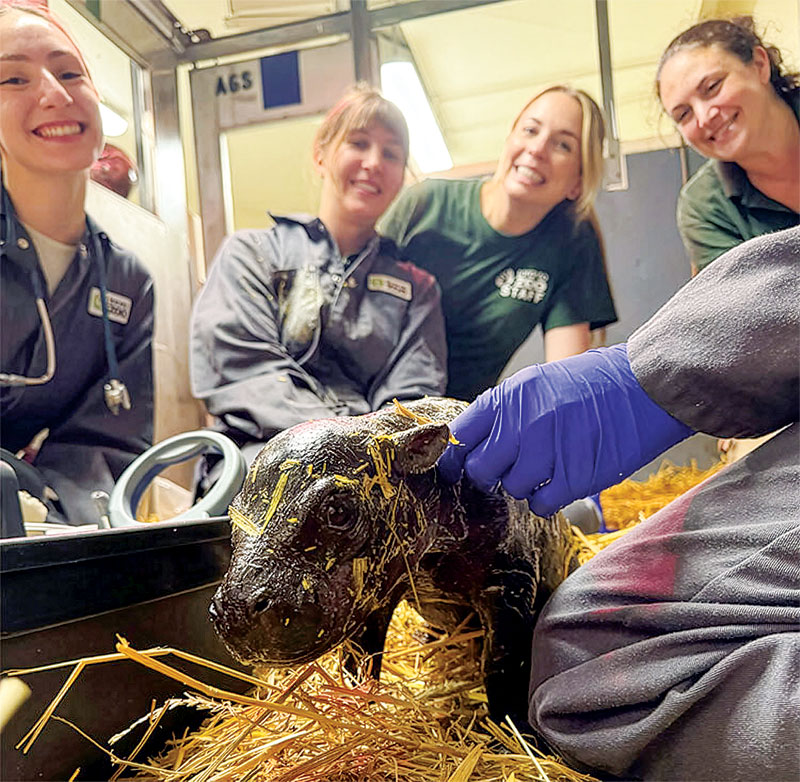
At the Wildlife Health & Science Centre, we take every opportunity to collect as much information from each individual as possible. By performing comprehensive examinations that include radiographs, blood analysis, morphometrics, reproductive evaluations, and banking samples to answer future questions, we are able to help advance the veterinary profession by pushing the boundaries of what is thought to be possible. We can work to define “normals,” which in turn allows us to better assess free-ranging, in situ populations; similarly, we are developing Canada’s Wildlife Cryobank, which will serve as a “frozen archive” to preserve biodiversity in the event of a natural catastrophe.
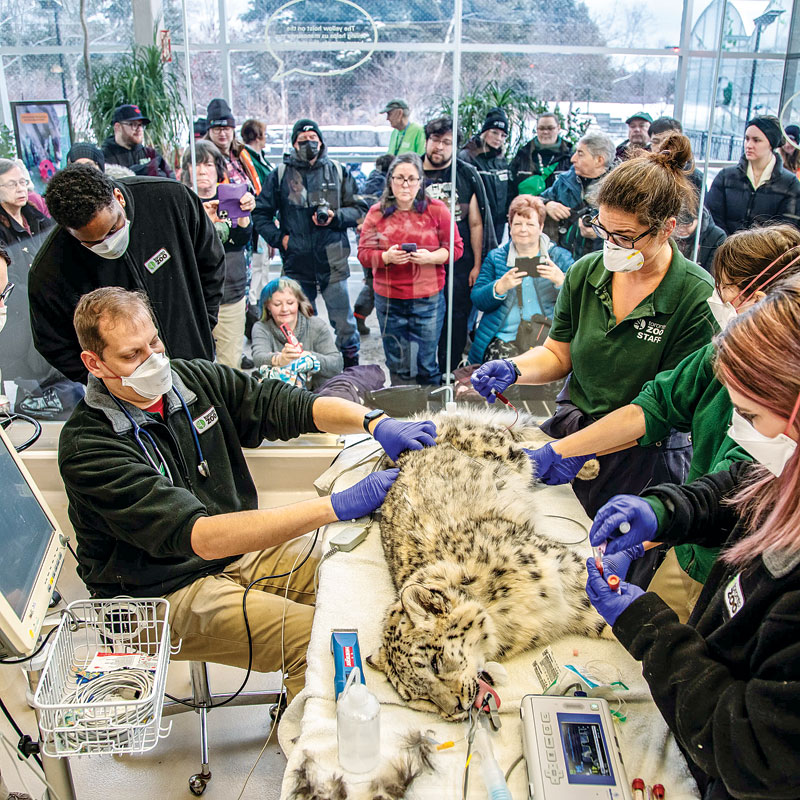
We also have an amazing public gallery where guests can observe the daily activities within the Wildlife Health & Science Centre. This allows visitors to get an up-close view of the care we provide and brings awareness to many aspects of veterinary medicine, conservation, and responsible animal ownership.
Sharing knowledge is a passion of mine, and my hope is that at least one guest each day is inspired by our conservation messaging and takes action to help save species. Over time, this would have a cumulative effect greater than any one individual can achieve.
5) Looking ahead, what emerging wildlife health issues do you believe veterinarians should be paying closer attention to, and how can practitioners become stronger advocates for both wildlife and the people who care for animals?
Unfortunately, the biggest emerging issue is one that lacks an “easy fix” and is becoming increasingly controversial—climate change. As we see greater extremes in temperature and weather patterns, there are countless impacts on wildlife. A difference of a few degrees in the ocean temperature can result in catastrophic loss of corals (coral bleaching). There is also range expansion for invasive species that can wreak havoc on native species and ecosystem health.
One of the best ways to be a stronger advocate for wildlife and those who care for animals is to be mindful of what goes into the products we use every day. Choosing sustainably sourced products (or avoiding those with less-than-sustainable practices) can make a major impact if we all take action. For example, palm oil is often harvested in ways that increase deforestation and reduce orangutans’ habitat. Ocean Wise seafood reduces overfishing and population depletion. Ultimately, being a conscious consumer can have widespread impacts with relatively little effort. As veterinary professionals, we are at the forefront of educating the public about these approaches.

Sign up for our newsletter
Get all the latest news and features from Veterinary Practice News Canada. Submit your email below to get our twice-monthly newsletter.
Popular Articles
-
1
-
2
-
3
-
4
-
5
Read the Latest Issue

